

A Point-of-Control (POC) fluid inventory system helps service garages control, track, and document how fluids move from bulk storage to the bay. After this first mention, we’ll use POC.
For shops that dispense oil, antifreeze, transmission fluid, hydraulic fluid, gear oil, water, air, and other fluids across multiple bays or work areas, POC helps answer one important question: where did the fluid go?
Instead of relying on handwritten notes, manual meter readings, or technician memory, a POC system connects the equipment already moving fluids through your facility, including pumps, tanks, hose reels, meters, valves, dispense points, and reclaim systems. That gives service managers better visibility into fluid usage, inventory, billing, accountability, and workflow.
We help vehicle service facilities improve how fluids move through the shop with pumps, hose reels, meters, fluid management systems, reclaim equipment, installation, training, repair, routine inspection, audits, and ongoing service. For maintenance shops, fleet maintenance facilities, public works garages, mobile service trucks, and construction vehicle maintenance operations, better fluid control can reduce waste, improve accuracy, and help technicians work more efficiently.
A Point-of-Control fluid inventory system is a shop-level control system that helps manage the delivery of fluids at the point where they are dispensed.
In a service garage, that means the system is connected to the equipment technicians already use every day, such as:
The goal is not just to move fluid. The goal is to make fluid movement controlled, measured, and traceable.
That matters because vehicle service fluids are easy to lose track of in a busy shop. A technician may pull oil for one truck, top off coolant in another bay, dispense hydraulic fluid into a piece of construction equipment, and use air or water in another service area. Without a connected system, the shop may not have a reliable record of what was used, who dispensed it, or which vehicle or work order it belonged to.
Modern fluid management systems are designed to monitor consumption, improve inventory control, dispense precise volumes, and generate analytics that support better decision-making.
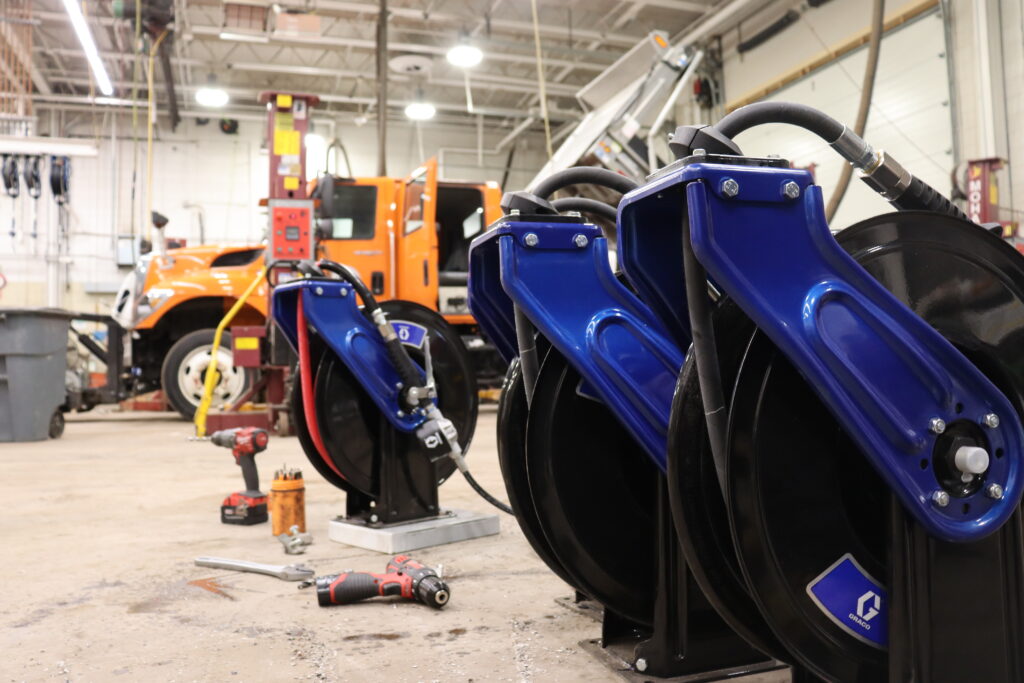
Service bay hose reel installation showing organized fluid delivery points that help technicians access the fluids they need while keeping the work area cleaner, safer, and more efficient.
Fluid control becomes important when a shop reaches the point where “close enough” is no longer good enough.
That usually happens when the facility has:
The problem is not always a major spill or obvious misuse. Often, the problem is a small loss repeated every day.
Think…
A quart of oil is dispensed but not recorded.
A coolant top-off is missed on a work order.
A technician pulls hydraulic fluid from the wrong location.
A reel is down, so someone walks across the shop to use another bay.
A tank runs low earlier than expected.
A manager cannot confidently match purchased fluid to dispensed fluid.
A POC system helps solve that by turning fluid movement into usable data. Graco notes that paper-based bulk oil management is inefficient and expensive, while effective bulk fluid management helps fleet vehicle service shops control expenses by managing inventory more closely.
For shops that rely on vehicle service equipment every day, fluid control connects directly to the pumps, reels, meters, valves, and reclaim systems that keep technicians moving.
POC is most useful when it is connected to the physical equipment that moves fluid through the shop. It is not just software sitting on a screen. It works best as part of a complete vehicle service equipment layout.
Bulk tanks
Bulk tanks store the fluids your shop uses most often, such as engine oil, antifreeze, hydraulic fluid, transmission fluid, and gear oil. Inventory control starts here because every dispense point eventually ties back to stored product.
If tank levels do not match recorded usage, the shop has a visibility problem.
Pumps
Pumps move fluid from storage to the bay, reel, meter, or dispense point. If pumps are unreliable, undersized, incorrectly installed, or difficult to maintain, technicians lose time and the entire fluid control process becomes harder to trust.
Hose reels
Hose reels keep fluid delivery organized and accessible. Properly placed reels reduce clutter, improve shop safety, and help technicians reach the work area without dragging loose hose across the floor.
Meters and dispense handles
Meters and dispense handles are critical because they measure what is actually delivered. When meters are connected to a fluid control process, the shop can better track dispense amounts, reduce overfills, and improve work order accuracy.
Graco’s Pulse FC system focuses on basic fluid control through authorized fluid cards and controlled dispenses, which can help shops manage who is allowed to dispense fluid and how much is delivered.
Valves and piping
Valves and piping route fluid to the correct bay, reel, or work area. A good layout helps prevent cross-contamination, reduces unnecessary hose runs, and makes the shop easier to expand later.
Fluid reclaim systems
Fluid reclaim systems collect used or waste fluids. While reclaim is often treated separately from dispensing, it still plays a role in overall fluid control because it affects housekeeping, disposal planning, and environmental responsibility.
We support the full fluid handling setup behind a service garage, including hose and cord reels, fluid reclaim systems, pumps, meters, dispense equipment, and valves. For facilities that need help with pumps, meters, reels, valves, reclaim systems, or fluid handling layout, our vehicle service equipment support can help modernize the way fluids move through the shop.
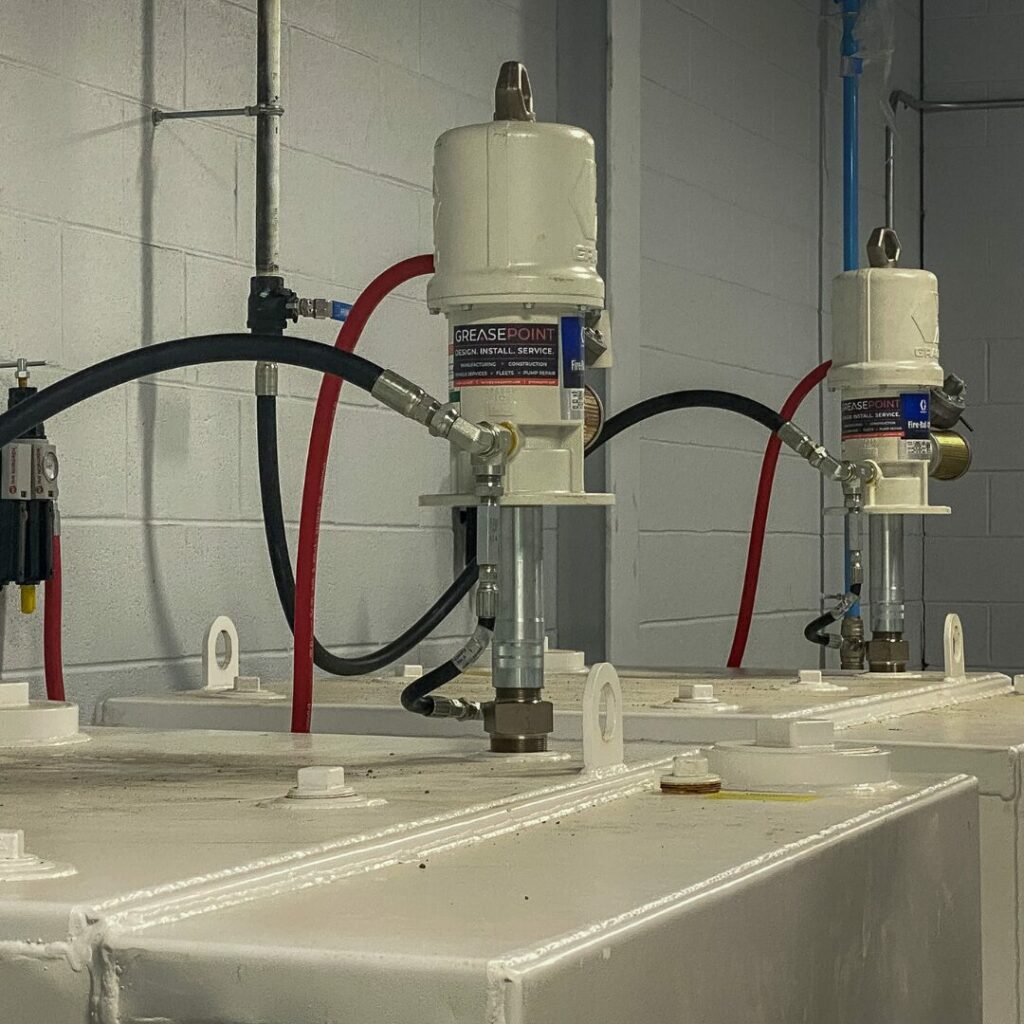
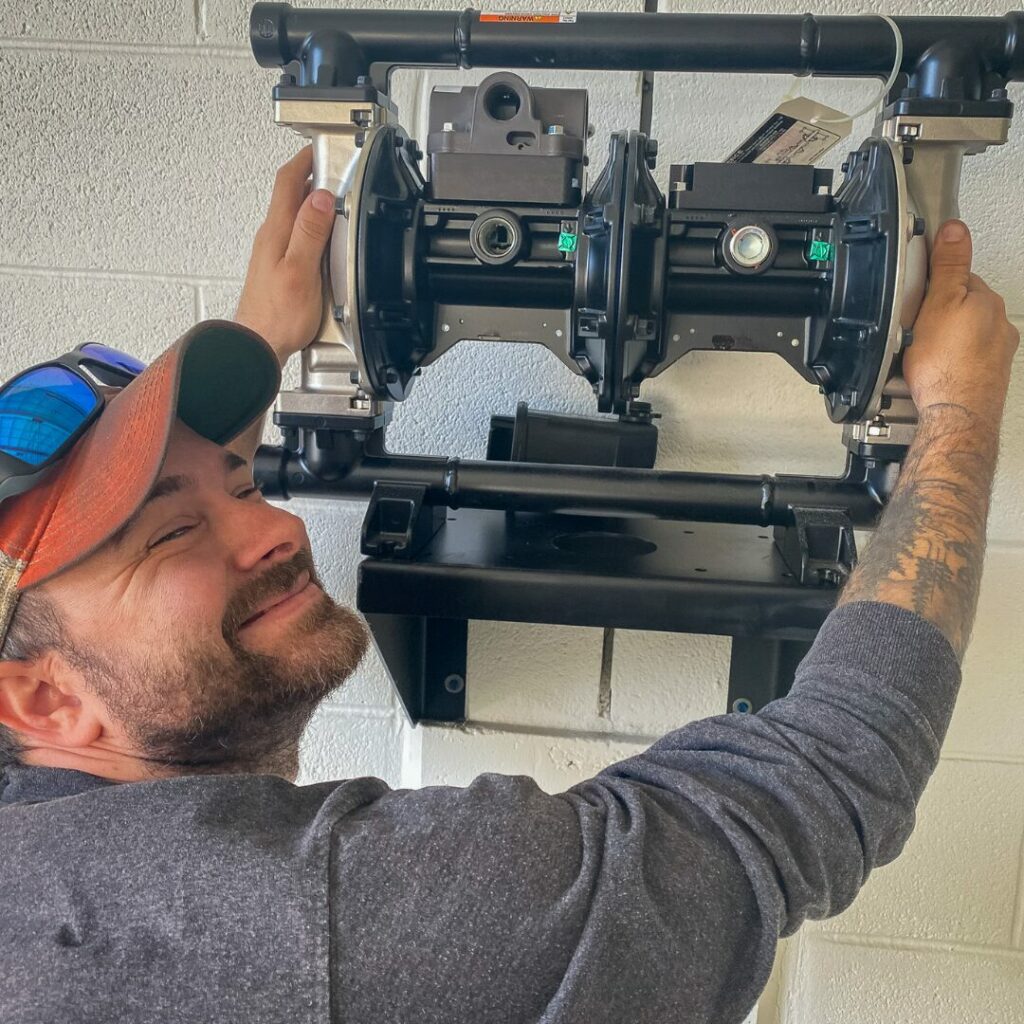
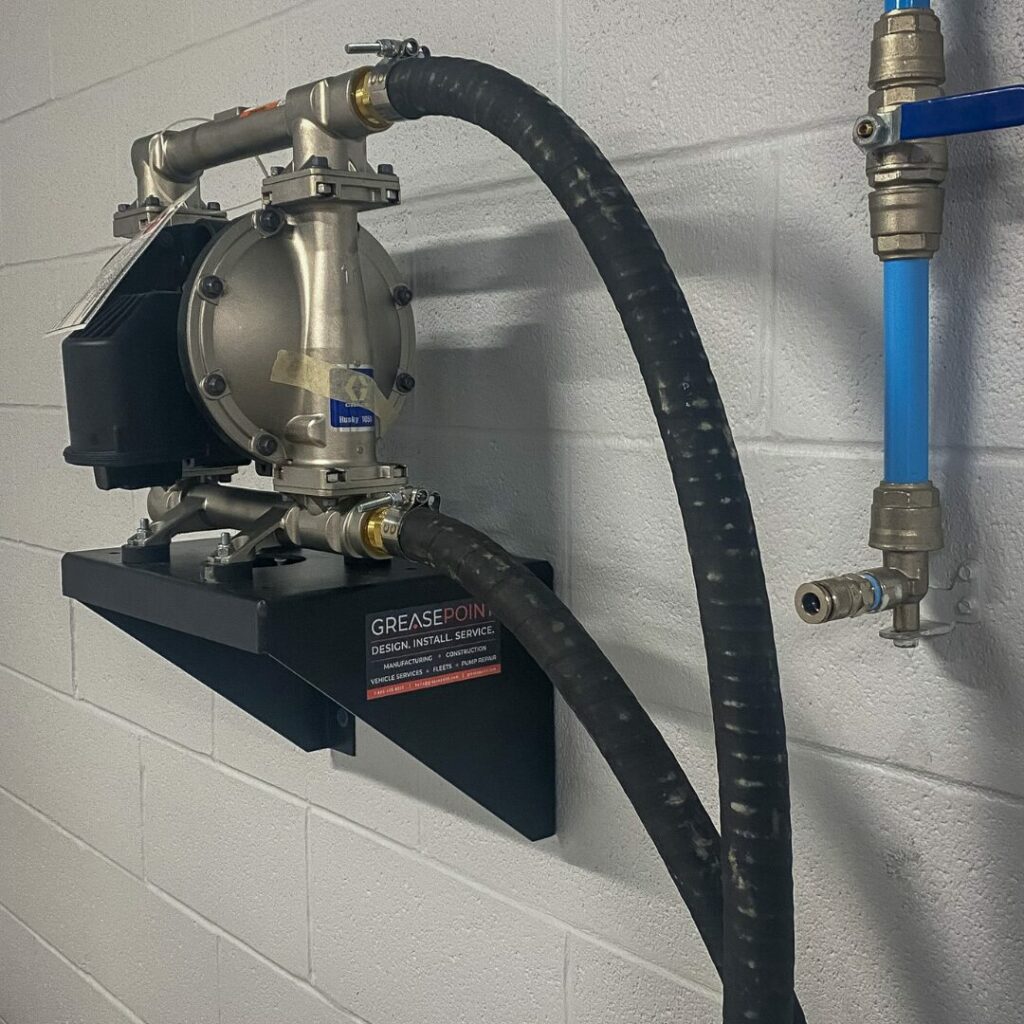
Photos from a recent highway garage facility installation, showing bulk fluid equipment, wall-mounted pumps, piping, and dispense support built to keep service bays organized, efficient, and ready for daily fleet maintenance.
A POC fluid inventory system can be configured around the fluids your shop uses most often. For mobile equipment and fleet service facilities, that commonly includes engine oil, antifreeze, coolant, hydraulic fluid, transmission fluid, gear oil, water, and air.
Engine oil
Engine oil is one of the most frequently dispensed fluids in maintenance shops. Controlled dispensing helps reduce overfills, missed billing, and inventory mismatch.
Antifreeze and coolant
Coolant and antifreeze are easy to waste when technicians are topping off systems across many vehicles. Tracking helps ensure the right amount is dispensed and recorded.
Transmission fluid
Transmission fluid often requires accuracy because the wrong fluid type or volume can lead to performance issues. POC helps make the dispense process more accountable.
Hydraulic fluid
Hydraulic fluid is especially important for construction equipment, municipal fleets, public works garages, and mobile machinery. Usage can be high, and inventory surprises can slow down service.
Gear oil
Gear oil is often used in lower volumes but still needs to be measured accurately, especially for axles, gearboxes, and drivetrain components.
Water and air
Water and air may not always be tracked like billable fluids, but they are still part of the service bay layout. A complete vehicle service equipment plan should consider where these utilities are needed and how technicians access them.
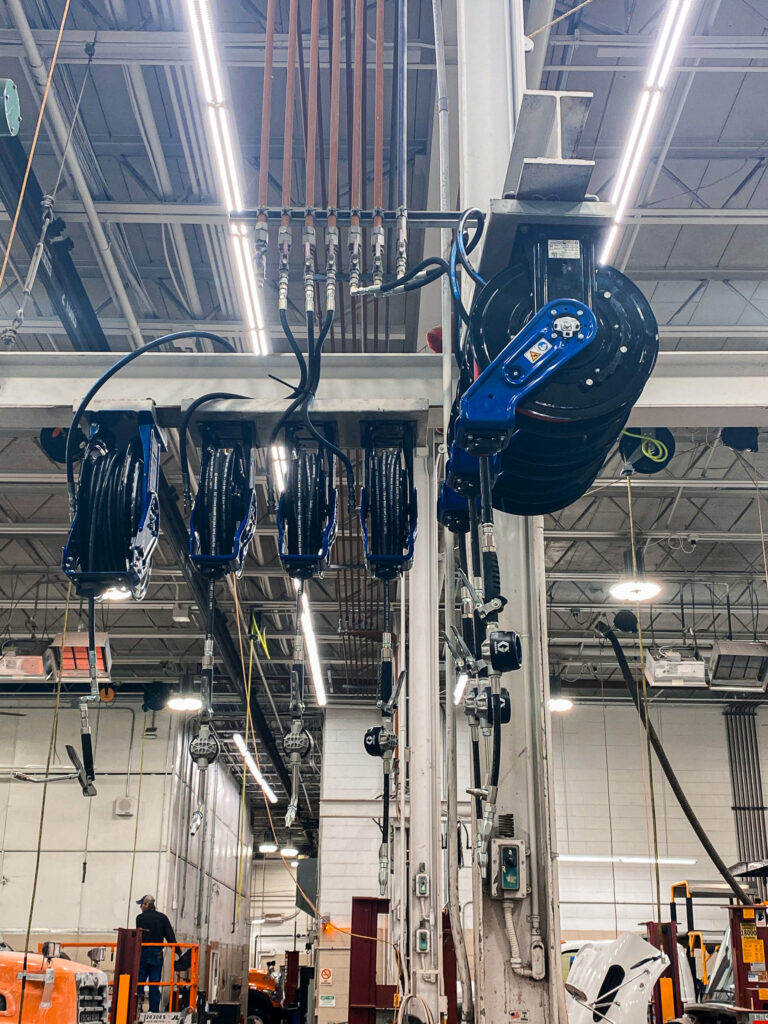
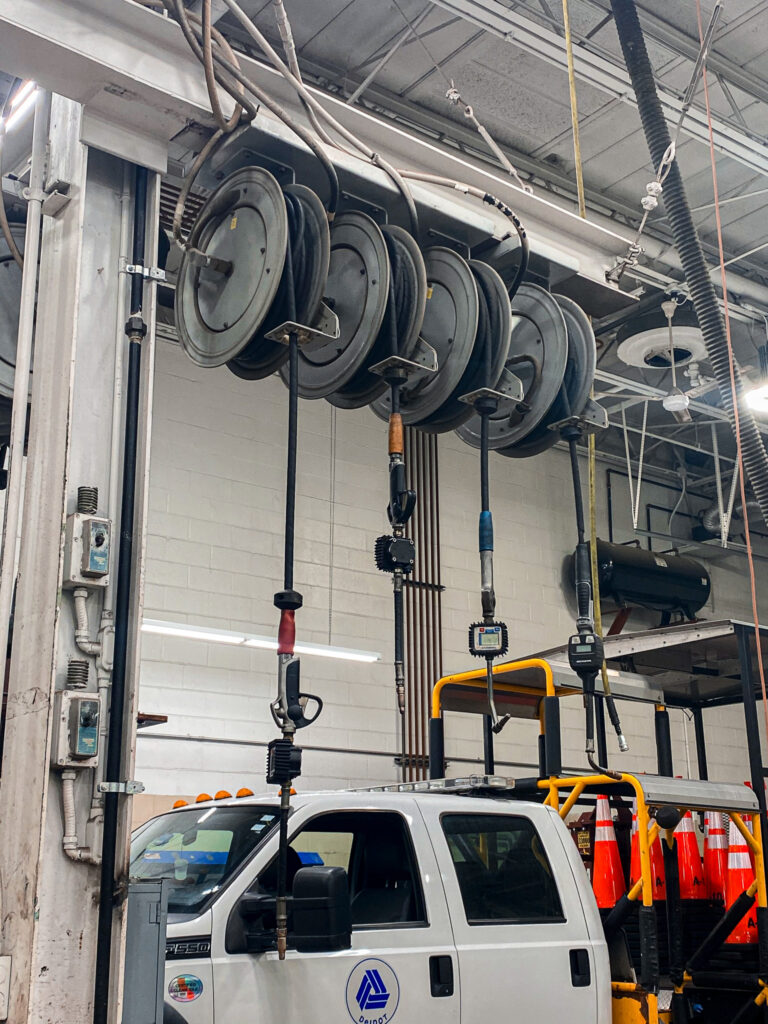
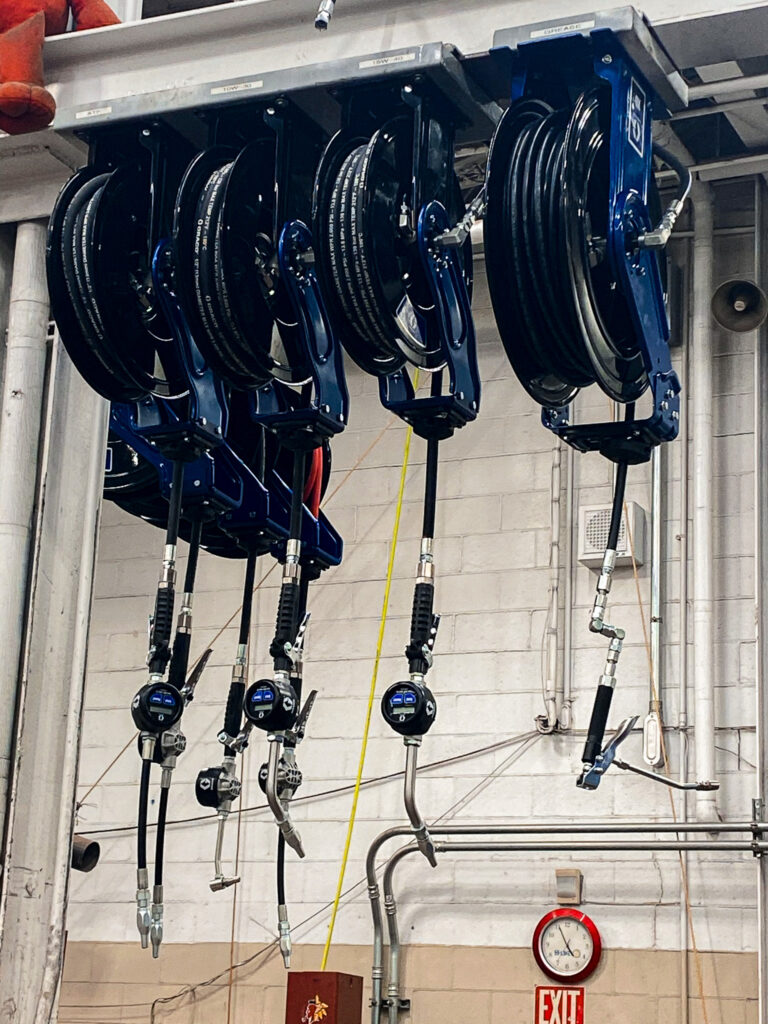
Municipal highway garage hose reel and meter installation showing organized overhead fluid delivery points that help fleet maintenance teams access oil, air, water, and service utilities efficiently across multiple bays.
Poor fluid tracking does not always look like a major operational failure. It usually looks like friction.
It looks like a manager trying to reconcile fluid purchases against incomplete work orders.
It looks like technicians waiting on a pump or reel that should have been repaired months ago.
It looks like a bulk tank running low before the next scheduled delivery.
It looks like fluids being used without proper authorization.
It looks like missed chargebacks in a municipal or fleet maintenance environment.
Over time, those issues create real cost.
The most common consequences include higher material spend, missed billing or chargeback opportunities, inaccurate job costing, emergency fluid orders, lower technician productivity, more time spent checking tank levels, poor visibility across bays and shifts, and difficulty proving usage history.
Fluid management helps track inventory, organize billing, justify each dispense, reduce oil shrinkage, and connect fluid usage to a technician, fluid type, and specific work order.
POC supports efficiency by making the shop’s fluid process more structured and easier to manage.
It controls who can dispense fluid
Authorization helps reduce unauthorized dispensing and makes it easier to connect fluid usage to the right technician, bay, department, vehicle, or work order.
It controls how much fluid is dispensed
Preset dispense amounts reduce overfills and help technicians deliver the right volume more consistently. Graco describes effective fluid control as dispensing precise, pre-authorized volumes to create efficiencies across shop operations.
It improves inventory visibility
When fluid usage is tracked, managers can make better decisions about reorder timing, stock levels, and bulk tank management. Pulse Pro, for example, is built to monitor fluid inventory and schedule refills to reduce delays and unnecessary costs.
It supports better work order accuracy
Fluid usage can be easier to connect to the correct job, vehicle, technician, or department. That is especially helpful for fleet maintenance, public works garages, dealerships, and internal service departments.
It reduces wasted technician movement
A well-planned vehicle service equipment layout puts fluids where technicians need them. Reels, meters, pumps, and valves should support workflow instead of forcing technicians to work around the system.
It helps the shop scale
As a facility adds bays, fluids, technicians, or service volume, a stronger fluid control setup makes it easier to expand without losing accountability.

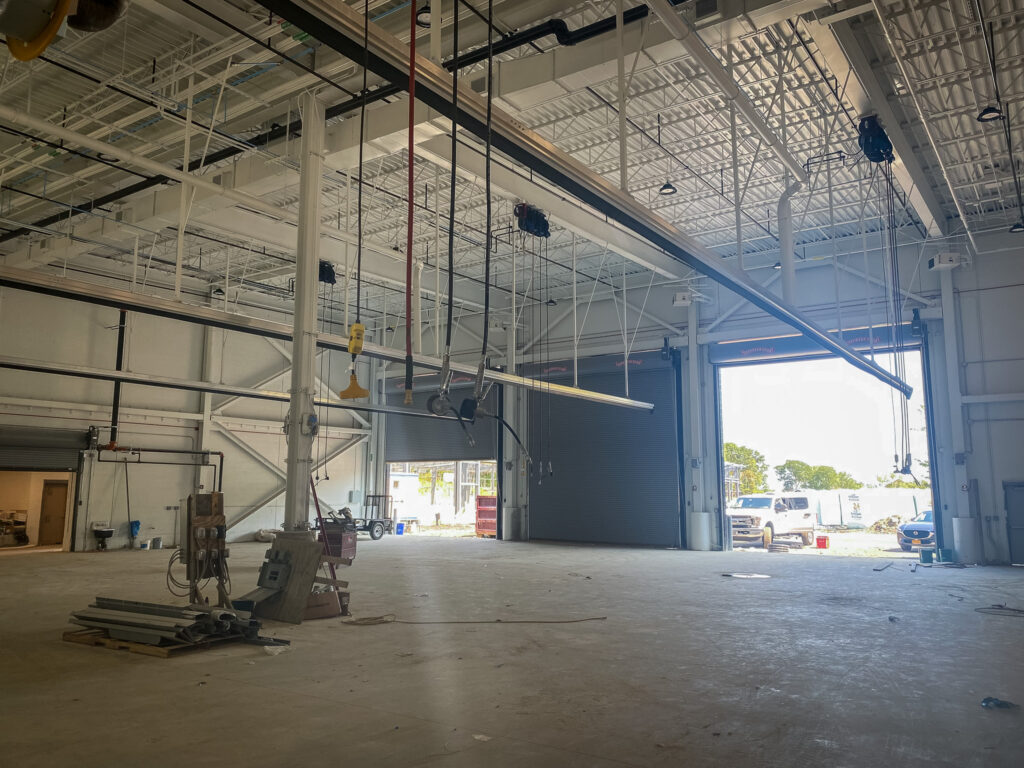
Additional views from the same highway garage installation, highlighting overhead hose reel placement, shop-wide piping runs, and bay coverage designed to give technicians reliable access to fluids, air, and service utilities throughout the facility.
A shop may be ready for a POC upgrade if any of these problems sound familiar:
The clearest warning sign is simple: if your team cannot quickly answer what fluid was dispensed, how much was used, where it went, and who used it, the shop has outgrown its current process.
Some facilities may still use older POC-style controls. Others may be considering a modern fluid management upgrade.
The real question is not whether the current system is old. The real question is whether it still gives the shop the visibility and control it needs.
A legacy setup may still move fluid, but it may be harder to retrieve reports, expand to new dispense points, support modern meters, or connect data to the way the shop manages work today.
Modern systems can offer stronger control over authorization, dispense amounts, inventory reporting, tank monitoring, and expansion. Pulse Pro, for example, is positioned around transparency, accountability, integration, and inventory management, including the ability to monitor every dispense and manage fluid inventory.
Sometimes the answer is not just replacing software. The shop may also need to evaluate pumps, reels, meters, valves, line routing, tank placement, and service support.
We help service garages and fleet maintenance facilities improve how fluids are stored, moved, dispensed, measured, lubricated, and maintained.
Our vehicle service work includes:
We work with equipment used throughout the service garage, including Graco pumps, hose reels, meters, and fluid management systems, along with SKF Lincoln lubrication systems for shops and fleets that need dependable grease delivery, system service, and troubleshooting.
For facilities building new garages or expanding existing service areas, our sister brands can support the larger infrastructure around the shop. Compressor Maintenance Co. helps with compressed air system needs, including compressors, dryers, piping, air treatment, audits, service, and installation. PennAir supports pneumatic and hydraulic solutions that help service garages keep tools, equipment, and fluid power systems running properly.
For service garages, the value is practical: better fluid accountability, fewer workflow delays, cleaner inventory data, reliable lubrication support, and access to compressed air, pneumatic, and hydraulic expertise when the facility needs more than one solution.
If your shop is still relying on manual notes, disconnected meters, outdated reels, unsupported lubrication equipment, or a legacy system that no longer fits the way you work, a POC upgrade may be one of the simplest ways to improve accuracy and reduce hidden waste.
We’re looking forward to working with you. Whether you have questions about products or services, our team is ready to help.
Point-of-Control refers to managing fluid at the place where it is dispensed. In a service garage, that means controlling and tracking fluids through equipment such as pumps, reels, meters, valves, and dispense points.
A POC system can help track common service garage fluids such as engine oil, antifreeze, coolant, transmission fluid, hydraulic fluid, gear oil, water, air, diesel, fuel, grease, and other fluids depending on the shop setup.
Fleet maintenance shops, public works garages, municipal service facilities, construction vehicle maintenance shops, dealerships, heavy equipment service centers, and mobile service operations can all benefit from better fluid control.
Yes. When fluid usage is tracked more accurately, it becomes easier to connect dispensed fluid to the correct work order, vehicle, department, or technician. This can improve billing, chargeback accuracy, and job costing.
Yes. We can inspect and service many existing pumps, reels, meters, valves, and related fluid handling systems. We can also provide training and recommendations to help keep the system reliable and cost-effective.


 English